The Bajío: a vehicle assembly belt laid out on planned land
The Bajío is farmland that became a vehicle assembly belt inside a single working lifetime. Assembly plants were placed on the central plateau because land was flat, rail already ran north, and the labour force carried no prior heavy-industrial habits. Everything afterwards followed those siting decisions: parts plants, serviced parks, technical colleges, logistics yards. Read as a planned build-out rather than an organic cluster, the region becomes much easier to evaluate.
- Hub type
- industrial region
- Country
- Mexico
- Location
- The Bajío is a highland plain across central Mexico taking in parts of Guanajuato, Querétaro, Aguascalientes and San Luis Potosí, inland from both coasts.
- Logistics connections
- rail freight corridors running north to the border crossings, inland intermodal terminals with customs-bonded yards, motorway spine linking the assembly plants to one another, regional airports with air cargo capability
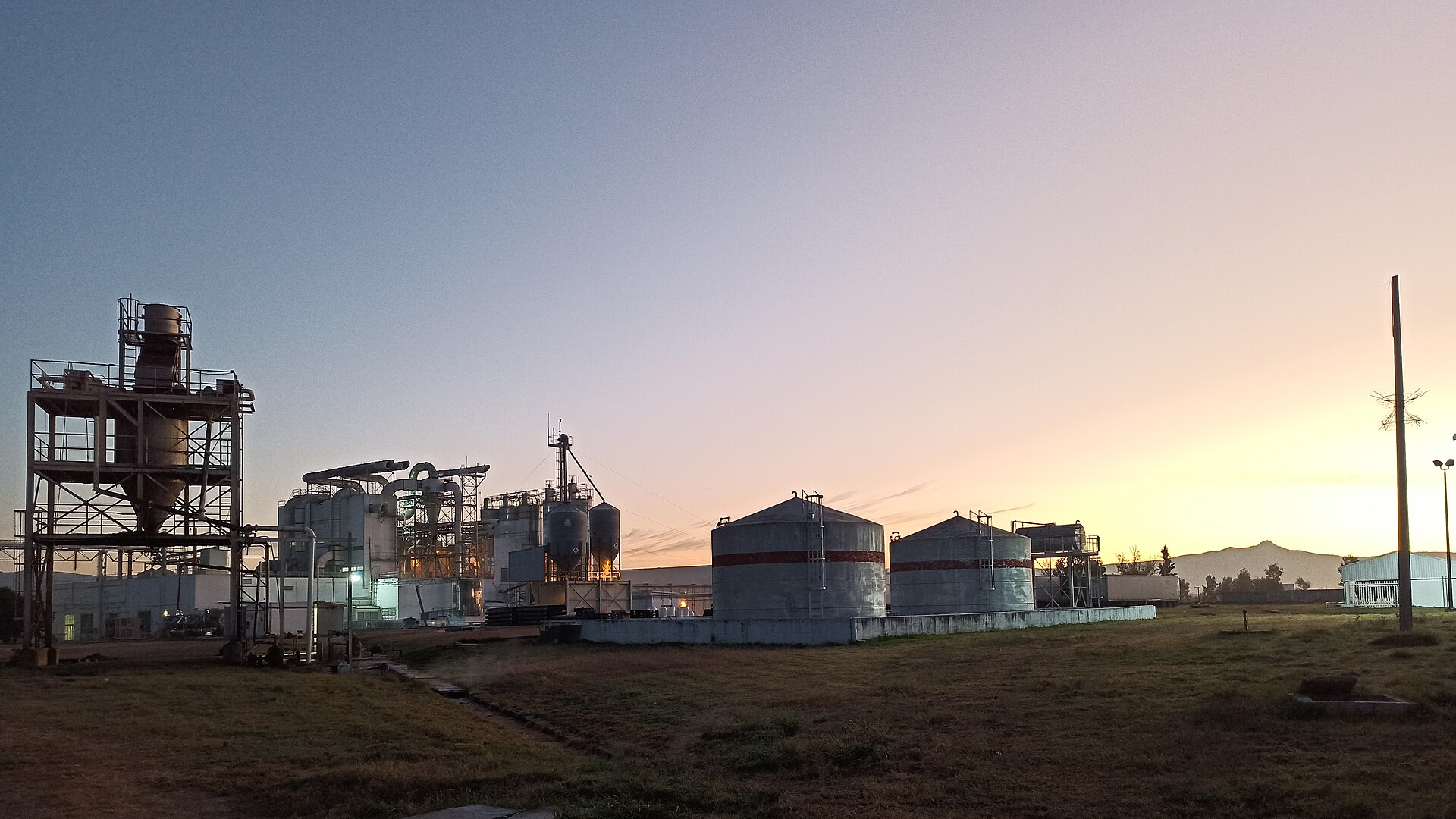
How a farming plateau was selected
Site selection here rewarded ordinary things. The plain gave large, flat, buildable parcels without the drainage problems of the coasts. Existing rail ran north towards the border, so finished vehicles and inbound components had a route before anyone laid a foundation. State governments competed by preparing land in advance, bringing power and water to the fence line and shortening permitting. Crucially, the labour force had no heavy-industrial history, which investors read as an absence of entrenched practice. Each assembly decision then pulled the next: once one manufacturer committed, competitors had a serviced corridor, a trained pool forming and suppliers already scouting parcels nearby.
The tier structure that grew around the assembly halls
Sequenced delivery dictates geography. Seats, cockpits, bumpers and other bulky sub-assemblies are built within a short drive of the line because they must arrive in build order, so tier-one plants ring the assemblers physically. Behind them the picture thins. Stamping, injection moulding, harness assembly and machining are well represented, while specialised second and third-tier processes — precise heat treatment, high-grade castings, electronic modules — are more often imported or supplied by a handful of firms. Domestic small manufacturers frequently struggle to clear the qualification and documentation bar, which is why local content targets are harder to meet than the count of plants suggests.
Training a workforce that had never built a car
Because the region industrialised from a low base, employers built the training themselves. In-plant schools, dual-track arrangements with technical colleges and structured operator progression are common, and several assemblers imported their home country's apprenticeship model wholesale. That works until the neighbours arrive. Once several plants share a labour catchment, trained technicians and maintenance staff become the scarce resource and move between employers for modest gains, so retention costs rise faster than entry wages. A supplier planning a site should look at how many industrial employers already draw from the same towns, not only at the headline availability of workers.
Parks, power and the water question
Industrial land here is bought as a serviced plot inside a park rather than as a field. The park operator supplies road, power connection, security, effluent treatment and often customs support, which compresses project timelines but also fixes your utility arrangements and your neighbours. Electricity planning deserves early attention, since a connection at the capacity a paint shop or a foundry needs is a lead-time item rather than a formality. Water is the genuine structural constraint: the plateau depends on aquifers under sustained pressure, and permitted abstraction is the question that decides whether a water-intensive process can be sited here at all.
What a supplier should test before committing a plant
Start with the obligation you are actually signing. Sequenced supply contracts transfer line-stoppage exposure onto the supplier, so understand the penalty structure and the buffer you must hold before quoting. Confirm which union represents the site and how collective agreements are negotiated, because representation rules have changed materially and inherited assumptions are unsafe. Verify the water permit and the electricity connection date independently of the park's brochure. Finally, map the freight lane you will actually use to the border, including the intermodal terminal and the customs broker, since inland transit variability, not plant output, is what usually breaks a delivery promise.
Industrial sectors present
- automotive manufacturing
- automotive parts manufacturing
- aerospace manufacturing
- rubber products manufacturing
- metal fabrication
- plastics
- appliance manufacturing
Frequently asked questions
- Is the region only about vehicle assembly?
- Assembly set the pattern, but it is not the whole picture. Aerospace machining and component work established itself around Querétaro with its own training institutions and approvals, appliance and rubber production operate across the plateau, and general metalworking serves both. The point is that almost all of it was drawn in by the assembly investments and shares their infrastructure, so sectors here rise and fall with vehicle programme decisions more than they would elsewhere.
- How do inland parks compare with a border location?
- The trade is transit time against labour stability and land. A border plant crosses into the United States the same day; a plateau plant adds a long domestic haul first, which shows up as inventory and as schedule variability. In exchange, the Bajío offers larger serviced parcels, a labour market less exposed to cross-border wage pull, and closer physical access to the assembly lines that consume the parts. The right answer depends on whether your product is time-critical or bulky.
- What usually goes wrong for a first-time investor here?
- Underestimating utilities and people. Companies plan the building carefully and then discover that the electrical connection they specified arrives later than the equipment, or that permitted water withdrawal will not support the process they intended. The second failure is staffing: recruiting operators is straightforward, but maintenance technicians, quality engineers and tooling specialists are contested across the whole plateau, and a plant that fails to plan retention finds its trained people working for a neighbour.
Data limitations
- Manufacturing figures are operator-supplied inputs, not market data. GeoBusinessIQ holds no factory costs, production volumes, yields, cycle times, tooling prices or capacity data and does not estimate them — every result reflects only the figures you enter.
- No manufacturer, supplier, vendor or factory is recommended, rated or ranked anywhere in this cluster, and no directory of them is published. Selection material describes how to run your own assessment; the assessment itself remains yours.
Explore the graph
Industries present
- Aerospace production: traceability as the binding operating constraint
- Appliance factories: platform volumes, retail listings and the warranty reserve
- Automotive parts: a catalogue business that happens to own machines
- Plastics manufacturing: a conversion-margin business, not a materials business
- Rubber goods manufacture: compounds as the real intellectual property
- Sheet metal fabrication as a business: laser time, bend complexity and welded assemblies
Supply chain context
Sources
- Mexican Ministry of Economy — Secretaría de Economía (accessed )Covers: Mexican industrial, trade and investment policy, including manufacturing programmes.Does not cover: Company-level data, programme eligibility, or site costs.Why it matters: Cited on Mexican industrial hub pages for the national industrial policy environment.Review cadence: annual
- Mexican National Institute of Statistics and Geography — INEGI (accessed )Covers: Official Mexican statistics including manufacturing output and industry structure.Does not cover: Forecasts, or plant-level figures.Why it matters: Cited as the official statistical authority for structural statements about Mexican industry.Review cadence: annual
- United Nations Industrial Development Organization — UNIDO (accessed )Covers: Industrial development analysis, industrial statistics methodology, and manufacturing capability programmes across member states.Does not cover: Company-level data, factory costs, supplier information, or real-time production statistics.Why it matters: The United Nations agency for industrial development; used for structural framing of how manufacturing sectors develop, never for point figures.Review cadence: annual
Educational and operational information only. This page describes an industrial location qualitatively; it publishes no output, employment, plant-count or ranking figures, names no individual manufacturer as a recommendation, and is not investment, siting, legal, or tax advice.
Last updated: