The Chennai corridor: export assembly with two ports behind it
The industrial belt running west and south out of Chennai was built for export assembly. Vehicle plants and their component suppliers occupy planned estates along the highways, and electronics assembly for global brands works alongside them on largely imported parts. Two ports and a wide intake of technical graduates explain why the belt formed where it did. Its character follows from that: volume assembly, tight inbound logistics windows, and a supply base that is deep in some tiers and noticeably thin in others.
- Hub type
- industrial corridor
- Country
- India
- Location
- The corridor extends west and south from Chennai on India's south-eastern coast in Tamil Nadu, following the highways through Sriperumbudur and Oragadam and the industrial estates beyond.
- Logistics connections
- container port serving the metropolitan area, a second northern port handling vehicles and bulk cargo, international air cargo terminal, national highway corridors linking the industrial estates
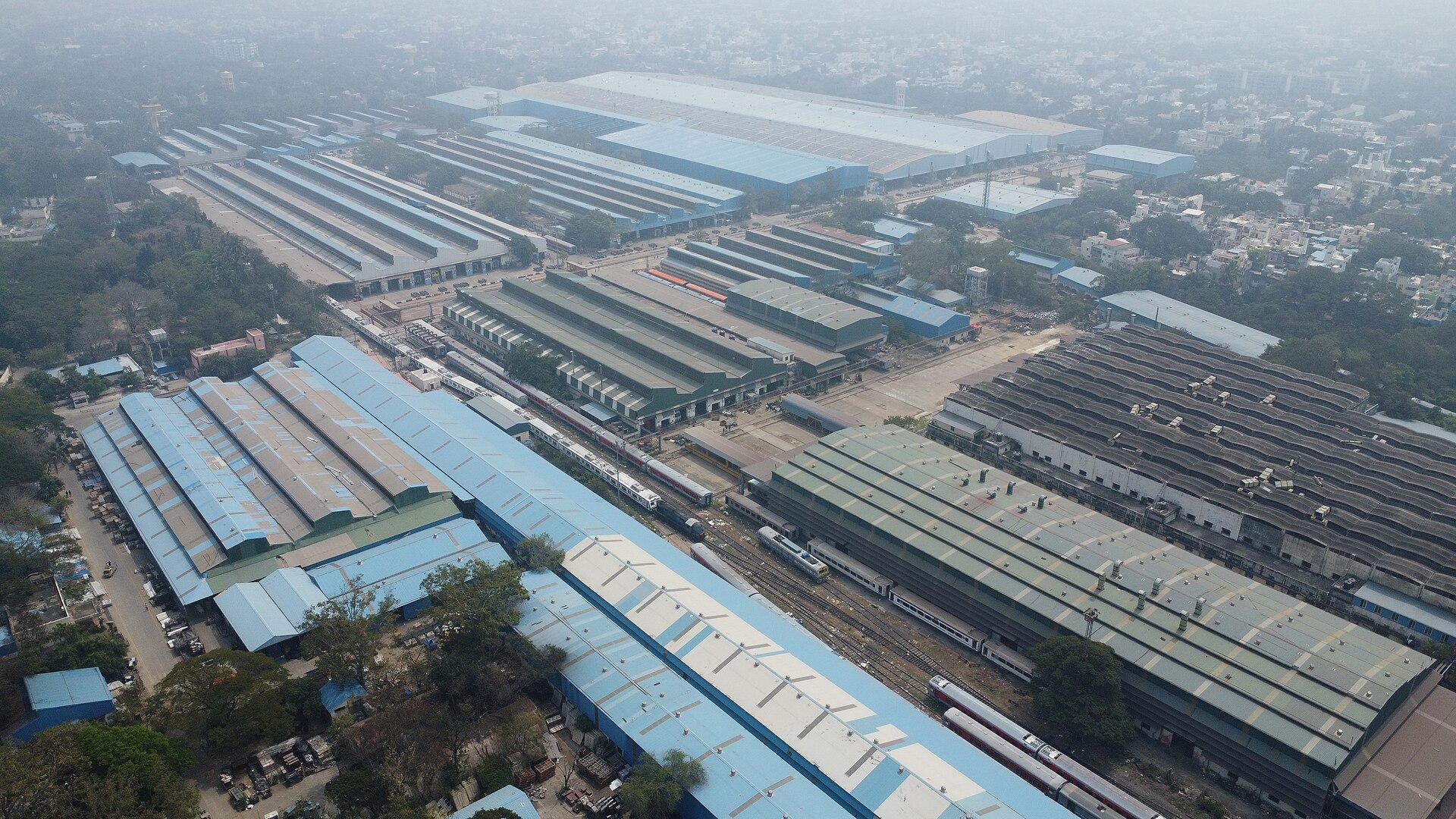
Why assembly settled on this stretch of coast
The state industrial development agency prepared land in advance along the highways, with power, water and road access delivered to plot boundaries, which meant a manufacturer could commit without assembling farmland parcel by parcel. Port access mattered for both directions: imported components arriving and finished goods leaving, including vehicles shipped from a dedicated terminal north of the city. Engineering colleges across the state supply technical graduates in numbers few regions match. Once several assemblers had committed, component suppliers followed to be within delivery range, and the corridor acquired the density that later investors were actually buying.
Deep in metal, thin in electronics
For anything cast, forged, machined, pressed, moulded or rubber-formed, local supply is genuine and competitive, with an established base serving vehicle and equipment manufacturers. Electronics is a different story. Assembly is performed here at scale, but the components — semiconductors, displays, camera modules, cells, precision connectors — are overwhelmingly imported, so the operation is a sophisticated assembly and test activity rather than a full manufacturing chain. That distinction matters when evaluating local content, resilience or lead time, because the supply risk sits upstream of the country entirely and no amount of local capacity changes it.
How the workforce is actually assembled
Two labour models coexist. Vehicle and component plants employ a core permanent workforce alongside substantial contract and apprentice labour, with industrial training institutes and polytechnics supplying the technical intake. Large electronics assembly operations recruit differently, drawing young workers, a high proportion of them women, from across the state and housing them in employer-arranged accommodation, which turns hostel management, transport and welfare into production-critical functions. Attrition in that model is high and seasonal, tracking the agricultural calendar and festivals, so a capacity plan needs an attrition assumption that the plant can actually defend.
Water, power and weather exposure
The corridor's most underrated risk is environmental. The region has experienced both severe water scarcity and major flooding, and cyclones make landfall on this coast, so process water supply, site drainage and business continuity deserve serious design attention rather than a paragraph in a risk register. Industrial water is often supplied through a combination of allocations, treated wastewater and tankers, and its reliability varies with the monsoon. Electricity supply has improved substantially, but many plants still maintain backup generation. Any site evaluation should examine the water source contractually and the flood history of the specific plot.
What a buyer should verify before placing volume
Check the import chain first, since duty structure and clearance performance on components determine both landed cost and schedule for assembly work. Ask the supplier to show visibility of its own second-tier sources, because problems here usually originate below the firm you audit. Confirm quality system evidence appropriate to the sector, with IATF 16949 for automotive work as a starting point rather than a conclusion. Establish who owns the tooling and where it sits. Finally, walk the inbound logistics route yourself, because highway congestion and port dwell time shape delivery reliability more than plant capacity does.
Industrial sectors present
- automotive manufacturing
- electronics assembly
- commercial vehicle manufacturing
- automotive parts manufacturing
- tyre manufacturing
- electrical equipment manufacturing
- footwear manufacturing
Frequently asked questions
- Does electronics assembly here reduce dependence on other countries?
- It relocates the final stage, which has real value in tariffs, employment and logistics, but it does not by itself localise the component supply. Boards, displays, cells and semiconductors are still imported, so a disruption upstream reaches these plants regardless of where assembly happens. Component manufacture is being encouraged through policy and some capacity is being built, though the deeper layers of that chain take far longer to establish than assembly capacity does.
- How should an overseas buyer handle inbound logistics risk?
- Plan for variability at the port and on the road rather than at the plant. Dwell time in customs clearance, container availability, and highway congestion around the metropolitan area are the usual sources of delay, and they are seasonal as well as routine. Practical measures include selecting a supplier with its own bonded warehousing or a dedicated clearing agent, agreeing where buffer stock sits and who funds it, and building the monsoon period explicitly into delivery commitments.
- What distinguishes the automotive supply base here from other Indian regions?
- Its breadth within a short radius, and its export orientation. Castings, forgings, machining, rubber, plastics and electricals are available close to the assembly plants, and a substantial part of the output is shipped abroad rather than sold domestically, which has forced quality systems and documentation to meet international customer expectations. The trade-off is competition for skilled staff and for utility capacity in a corridor where many manufacturers draw on the same infrastructure.
Data limitations
- Manufacturing figures are operator-supplied inputs, not market data. GeoBusinessIQ holds no factory costs, production volumes, yields, cycle times, tooling prices or capacity data and does not estimate them — every result reflects only the figures you enter.
- No manufacturer, supplier, vendor or factory is recommended, rated or ranked anywhere in this cluster, and no directory of them is published. Selection material describes how to run your own assessment; the assessment itself remains yours.
Explore the graph
Industries present
- Automotive parts: a catalogue business that happens to own machines
- Contract board assembly: clear-to-build, line hours and the handover pack
- Electrical equipment makers: wound products, type tests and efficiency rules that rewrite catalogues
- Footwear manufacturing: tooling per style, sizes per pair, and a very long development cycle
- Trucks and buses: configured assembly for buyers who count downtime
- Tyre plants: curing capacity, homologation and the replacement market
Sources
- Department for Promotion of Industry and Internal Trade, India — DPIIT (accessed )Covers: Indian industrial policy, manufacturing promotion programmes and industrial corridor development.Does not cover: Company-level data, programme eligibility, or supplier information.Why it matters: Cited on Indian sourcing and hub material for the national industrial policy environment.Review cadence: annual
- United Nations Industrial Development Organization — UNIDO (accessed )Covers: Industrial development analysis, industrial statistics methodology, and manufacturing capability programmes across member states.Does not cover: Company-level data, factory costs, supplier information, or real-time production statistics.Why it matters: The United Nations agency for industrial development; used for structural framing of how manufacturing sectors develop, never for point figures.Review cadence: annual
- OECD — OECD — economic and tax statistics (accessed ; reviewed )Covers: Comparable corporate tax, statutory rate, and economic indicators across member and partner economies.Does not cover: Effective tax rates, deductions and incentives, local surtaxes, and personal residency rules.Why it matters: Used as a cross-country baseline to sanity-check rates against primary tax-authority figures.Review cadence: Annual, plus on major statutory changes.
Educational and operational information only. This page describes an industrial location qualitatively; it publishes no output, employment, plant-count or ranking figures, names no individual manufacturer as a recommendation, and is not investment, siting, legal, or tax advice.
Last updated: