Jurong: industrial land planned and leased as national infrastructure
Jurong shows what industrial land looks like when a state treats it as infrastructure. Ground in the south-west of Singapore was reclaimed, laid out, serviced and leased for manufacturing, and the chemical island offshore was assembled from smaller islands specifically to host process plants sharing utilities, jetties and pipeline corridors. The estate's defining condition now is scarcity: there is no more land, so lease terms, allocation policy and building upwards determine who manufactures here and what for.
- Hub type
- free zone
- Country
- Singapore
- Location
- Jurong occupies the south-western corner of Singapore's main island together with the reclaimed island offshore, planned and leased as industrial land by the national industrial estate agency.
- Logistics connections
- container and bulk port terminals within the estate, dedicated chemical and gas jetties on the offshore island, international air cargo capacity at Changi, expressway links across the island to port and airport
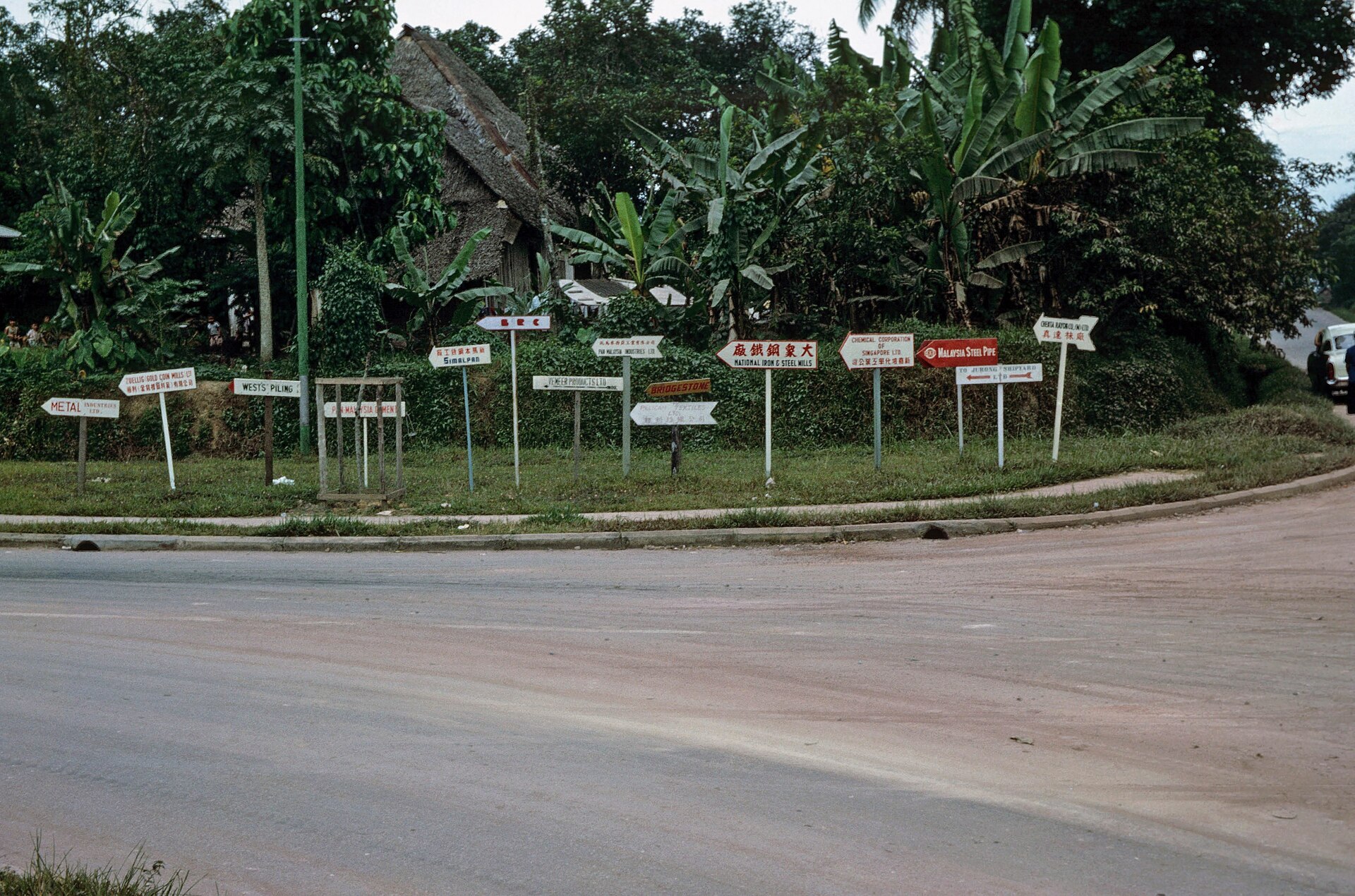
Land allocated rather than bought
Industrial occupiers here take leases from a state agency, not freehold title. That single fact shapes everything downstream. Allocation is discretionary and tied to what an occupier intends to do with the plot, so land goes to activities judged to make good use of a scarce resource rather than to the highest immediate bidder. Leases carry development obligations, permitted-use restrictions and reinstatement conditions at expiry, and remaining tenure affects financing and asset values in ways freehold does not. Anyone modelling a plant here should treat lease structure as a commercial term of the same weight as utility pricing.
Shared utilities as the chemical island's actual product
The offshore complex was built so that process plants could share what would otherwise be duplicated: jetties, storage tanks, pipeline racks, industrial gases, steam, cooling water, effluent treatment and emergency response. A cracker's output feeds a neighbour's reactor across a fence rather than through a shipping lane, which removes handling cost and inventory. The corollary is dependence. An outage, a contractual dispute or a shutdown at one operator reaches its neighbours quickly, so feedstock and utility agreements define the operating envelope as firmly as the plant design. Integration here is a commercial architecture, not merely a site layout.
Why regulated production came, and what it needs
Pharmaceutical, biologics and semiconductor plants chose this location on grounds unrelated to input cost: predictable utilities, enforceable intellectual property, an engineering workforce familiar with validated environments, and a regulatory system foreign inspectors accept. Those plants import almost all their materials, so the port and airport are part of the process, not merely a distribution channel. What they demand in return is reliability at a level most locations cannot promise — power quality for a fab, water specification for a fill line, and clean-utility maintenance regimes that are audited by customers and by overseas regulators alike.
A small labour force and how it is composed
Manufacturing here runs on a mixed workforce of citizens, permanent residents and holders of various work passes, with the balance between them set by national policy rather than by employers. Quotas and levies on foreign labour are policy instruments that change, and a plant's staffing model has to survive those changes. The practical effect is a strong push towards automation and towards processes that need technicians rather than operators. Training institutes and polytechnics supply process and maintenance skills at a good standard, but headcount-hungry assembly has steadily moved elsewhere in the region and is unlikely to return.
Reading the cost structure honestly
Nothing about this location is inexpensive, and manufacturers who come looking for cheap inputs choose wrong. What is bought is regulatory credibility, engineering depth, utility reliability and a stable operating environment, which matter most where a production interruption or a compliance failure costs far more than the labour bill. One point of confusion is worth clearing up: free trade zone treatment in Singapore attaches to designated port and airport areas rather than to the industrial estate as a whole, so customs status depends on where goods sit and under which scheme, not on being in Jurong.
Industrial sectors present
- specialty chemicals manufacturing
- chemicals manufacturing
- pharmaceutical manufacturing
- biologics manufacturing
- semiconductor manufacturing
- marine equipment manufacturing
Frequently asked questions
- What does leasehold industrial land mean in practice for a factory owner?
- It means your occupation has an end date and conditions attached. Remaining tenure affects what a lender will advance and what a buyer will pay for the business, and assignment or subletting generally needs the landlord agency's consent. Permitted use is specified, so changing what you make may require approval. At expiry there are reinstatement obligations. None of this is unusual locally, but it needs to be modelled explicitly rather than assumed away by companies used to owning their sites.
- Is there room for a new manufacturing plant at all?
- Room exists, but it is allocated rather than simply available, and it increasingly comes in vertical form. Multi-storey and stacked industrial buildings let several occupiers share a footprint, with vehicle ramps and heavy floor loading designed in. That works well for light and mid-weight processes and poorly for operations needing large single-level halls or hazardous material separation. A project needing extensive ground area or wide hazard buffers is more likely to be directed offshore to the chemical island or advised to look regionally.
- How does the estate handle process safety and environmental control?
- Through a combination of land-use separation, licensing and shared emergency infrastructure. Hazardous processes are concentrated where buffers, jetties and response capability already exist, rather than distributed across the island. Operators work under permits covering emissions, effluent and major-accident risk, with mutual aid arrangements between neighbouring plants. For an incoming manufacturer the significance is timing: hazard assessment and permitting sit on the critical path of a project schedule and cannot be compressed by construction speed.
Data limitations
- Manufacturing figures are operator-supplied inputs, not market data. GeoBusinessIQ holds no factory costs, production volumes, yields, cycle times, tooling prices or capacity data and does not estimate them — every result reflects only the figures you enter.
- No manufacturer, supplier, vendor or factory is recommended, rated or ranked anywhere in this cluster, and no directory of them is published. Selection material describes how to run your own assessment; the assessment itself remains yours.
Explore the graph
Industries present
- Biologics manufacturing: a living process, a fixed suite, and comparability after every change
- Commodity chemicals manufacturing: continuous plants, feedstock spreads and turnaround discipline
- Marine equipment: selling into yards, surviving on the retrofit
- Pharmaceutical manufacturing: campaign scheduling under a release process nobody can rush
- Specialty chemicals: batch campaigns sold on application performance
- Wafer fabs: yield learning on the most expensive floor in industry
Sources
- JTC Corporation — JTC (accessed )Covers: Singapore's industrial infrastructure developer, covering industrial estates, specialised parks and industrial land.Does not cover: Rents, allocation decisions, or availability of a specific site.Why it matters: Cited on industrial facilities and hub pages for how Singapore's industrial land and estates are organised.Review cadence: annual
- Singapore Economic Development Board — Singapore EDB (accessed )Covers: Singapore's industrial and investment promotion agency, covering advanced manufacturing sectors and industrial policy.Does not cover: Incentive decisions, company-level data, or investment advice.Why it matters: Cited for Singapore's manufacturing sector composition and industrial policy environment.Review cadence: annual
- Singapore Department of Statistics — SingStat (accessed )Covers: Official Singapore statistics including manufacturing output and industry structure.Does not cover: Forecasts, or plant-level figures.Why it matters: Cited as the official statistical authority for structural statements about Singapore's industry.Review cadence: annual
Educational and operational information only. This page describes an industrial location qualitatively; it publishes no output, employment, plant-count or ranking figures, names no individual manufacturer as a recommendation, and is not investment, siting, legal, or tax advice.
Last updated: