Ningbo: polymer processing and mould-making on Hangzhou Bay
Industry in Ningbo grew from two things that rarely coincide: a natural deep-water harbour and a regional tradition of privately owned, family-run factories. The combination produced a base heavy in polymer processing, mould making, small appliances, textiles and chemical intermediates, organised as thousands of specialised firms rather than a few conglomerates. Buyers who understand that structure find the city easy to source from; those expecting a single large supplier usually do not.
- Hub type
- industrial city
- Country
- China
- Location
- Ningbo lies on the southern shore of Hangzhou Bay in Zhejiang province, on the coast south of the Yangtze estuary, with its port spread across mainland and island berths.
- Logistics connections
- deep-water container and bulk terminals, cross-bay road bridge shortening the route north, rail freight corridor toward the interior, coastal expressway network along the eastern seaboard, petrochemical berths and pipelines serving the process cluster
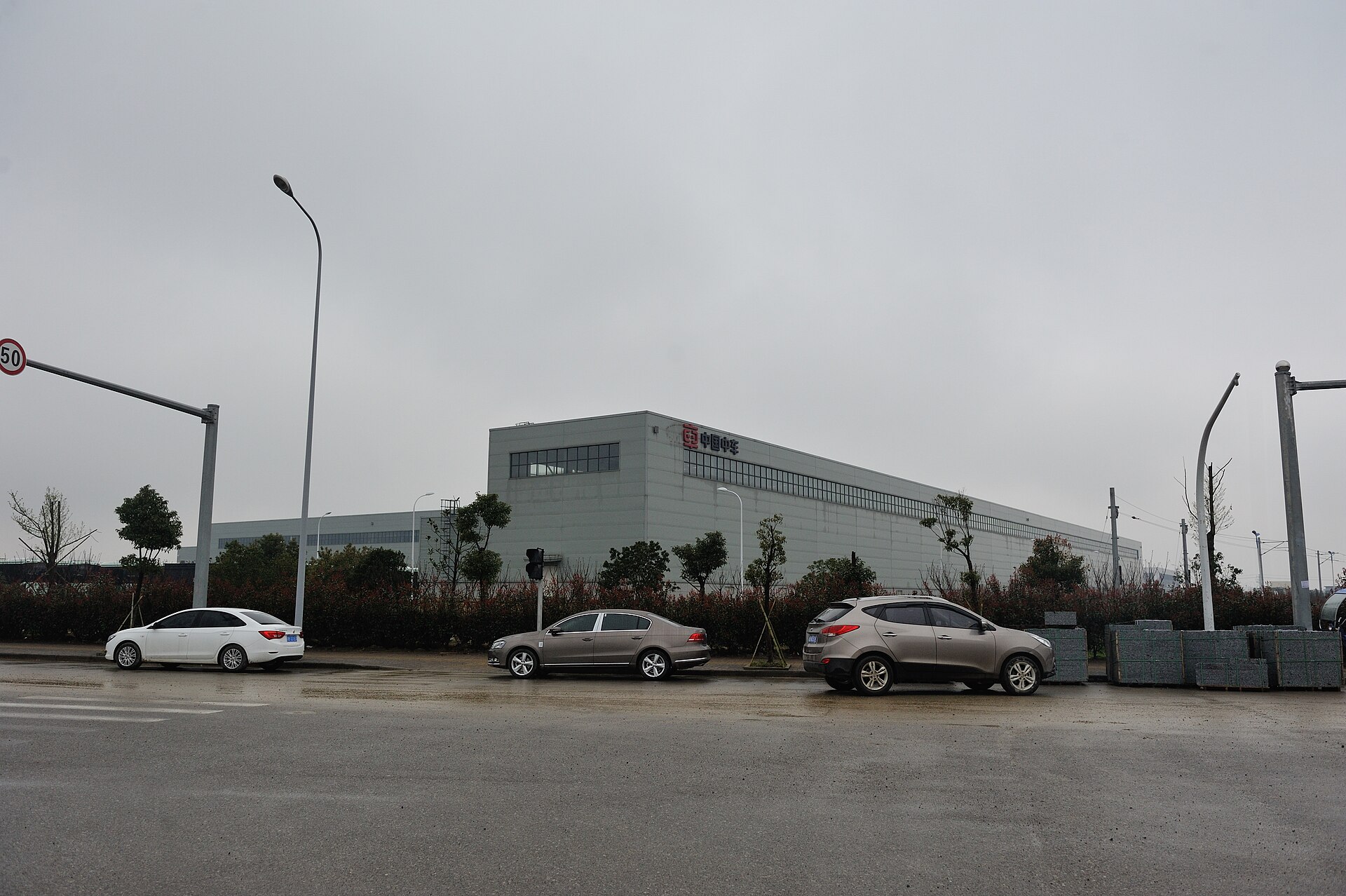
A deep harbour and a private-firm tradition
Deep water close to shore let this port take vessels that the shallower estuary further north could not, which pulled in bulk cargo such as ore, crude, chemicals and grain, and with it processing industry that wanted feedstock at the quayside. Alongside that, the province had an unusual density of small private enterprises well before national industrial policy favoured them, so light manufacturing developed from local capital and local trading networks rather than from foreign investment or state planning. Those two lineages still explain the shape of the place: heavy process plants on the water, and a dispersed hinterland of owner-managed factories making components and consumer goods.
Polymer processing and the mould trade
The plastics chain here is unusually complete. Resin arrives through the petrochemical berths, compounders and masterbatch producers sit nearby, moulders of every size operate across the surrounding county-level cities, and mould-making shops serve them all. A buyer specifying an injection-moulded product can therefore tender the tool and the parts separately and locally, which is not possible in most regions. The mould trade in particular supplies customers well beyond the province. Its range is wide, since a tool intended for a market trial and a hardened production tool are both available, and the specification rather than the quotation is what distinguishes them.
Small factories, narrow specialisms
Most manufacturers here are modest in size and deliberately narrow: one family of components, one process, one customer type. That specialisation delivers genuine competence and low overhead, and it makes competitive tendering straightforward because there are many comparable firms. The costs are structural. Engineering capacity beyond the owner and a small technical team is limited, quality systems are often present as certificates rather than as habits, and financing constraints make large tooling investment or long payment terms difficult. A buyer who supplies drawings, tolerances and inspection criteria gets good work; one who expects the supplier to develop the product usually does not.
Berths, bridges and the corridor inland
Freight here is straightforward in a way that many Chinese industrial bases are not, because the terminals are local and there is no dependence on another municipality port. A long cross-bay bridge shortened the road journey to the northern delta, integrating the city with markets that were previously a detour away. Rail links carry containers inland, and coastal shipping serves domestic customers along the seaboard. For process industries the important connections are the liquid and dry bulk berths and the pipelines behind them, which is why petrochemical and chemical capacity concentrated on specific stretches of coast rather than dispersing.
Due diligence points specific to this base
Three checks matter more here than elsewhere. First, ownership and scale, because many suppliers are genuinely small and a programme that would consume most of a plant capacity creates a dependency that should be examined rather than assumed away. Second, materials: with a resin trade this active, substitution of grade or use of recycled content to hold a price is a recurring failure, and it is invisible without testing. Third, compliance documentation for regulated export markets, which smaller owner-managed firms often cannot produce unaided. None of these disqualify the base; they simply define the work a buyer has to do.
Industrial sectors present
- plastics
- appliance
- textiles
- automotive parts
- chemicals
- electrical equipment
- metal fabrication
Frequently asked questions
- What makes Ningbo a practical place to buy moulded plastic parts?
- The whole chain is local. Resin comes ashore at the petrochemical berths, compounders sit close by, mould shops and moulders are spread across the surrounding towns, and the port ships the finished goods. That lets a buyer tender tooling and production separately, compare several genuinely comparable quotations, and avoid moving semi-finished goods between provinces. The discipline it demands is precise specification, because the range of quality available at any given price is wide.
- Are the small private factories here a risk for a larger buyer?
- They present a different risk profile rather than a higher one. Owner-managed firms tend to be responsive, cost-efficient and technically narrow, but thin on engineering support, formal quality systems and financial resilience. Concentration is the real danger, since taking a large share of a small supplier capacity leaves both parties exposed. Buyers usually manage this by qualifying a second source early, keeping tooling transferable and paying promptly enough that the supplier is not financing the relationship.
- How does the port change what a manufacturer here can do?
- It removes an intermediary. Plants ship directly from terminals in their own municipality, so there is no reliance on road haulage to another city berths and less exposure to congestion outside local control. For process industries the effect is stronger still, because bulk liquids and dry cargo arrive at dedicated berths connected to the plants that consume them. The practical result is shorter, more predictable outbound cycles and feedstock costs that reflect sea freight rather than inland transfer.
Data limitations
- Manufacturing figures are operator-supplied inputs, not market data. GeoBusinessIQ holds no factory costs, production volumes, yields, cycle times, tooling prices or capacity data and does not estimate them — every result reflects only the figures you enter.
- No manufacturer, supplier, vendor or factory is recommended, rated or ranked anywhere in this cluster, and no directory of them is published. Selection material describes how to run your own assessment; the assessment itself remains yours.
Explore the graph
Industries present
- Appliance factories: platform volumes, retail listings and the warranty reserve
- Automotive parts: a catalogue business that happens to own machines
- Commodity chemicals manufacturing: continuous plants, feedstock spreads and turnaround discipline
- Electrical equipment makers: wound products, type tests and efficiency rules that rewrite catalogues
- Plastics manufacturing: a conversion-margin business, not a materials business
- Sheet metal fabrication as a business: laser time, bend complexity and welded assemblies
Sources
- National Bureau of Statistics of China — NBS China (accessed )Covers: Official Chinese statistics including industrial output and industry structure.Does not cover: Forecasts, company-level data, or plant-level figures.Why it matters: Cited as the official statistical authority for structural statements about Chinese industry.Review cadence: annual
- World Bank — World Bank — open data and country profiles (accessed ; reviewed )Covers: Business-environment and company-formation indicators across economies.Does not cover: Current statutory tax rates, vendor availability, or provider-specific formation pricing.Why it matters: Used for formation-friction context in company-formation and startup-cost material.Review cadence: Annual data releases; re-checked each data review.
- United Nations Industrial Development Organization — UNIDO (accessed )Covers: Industrial development analysis, industrial statistics methodology, and manufacturing capability programmes across member states.Does not cover: Company-level data, factory costs, supplier information, or real-time production statistics.Why it matters: The United Nations agency for industrial development; used for structural framing of how manufacturing sectors develop, never for point figures.Review cadence: annual
Educational and operational information only. This page describes an industrial location qualitatively; it publishes no output, employment, plant-count or ranking figures, names no individual manufacturer as a recommendation, and is not investment, siting, legal, or tax advice.
Last updated: