Pune: engineering and vehicle building on the plateau above the port
Industry around Pune sits on a plateau inland from India's western container port, and that position explains its existence. Engineering works and vehicle plants were placed where land and water could be had while the port stayed within a day's reach. Commercial vehicles, two-wheelers, tractors, capital goods and a broad component base now occupy planned estates encircling the city, with an engineering services layer that has grown alongside them and increasingly designs what the factories build.
- Hub type
- industrial corridor
- Country
- India
- Location
- Pune lies inland from Mumbai on the Deccan plateau in western India, with industrial estates at Pimpri-Chinchwad, Chakan, Talegaon and Ranjangaon spread around the city.
- Logistics connections
- expressway descending to the container port complex serving Mumbai, inland container depots and customs clearance yards, rail freight link towards the western dedicated corridor, airport with limited dedicated freight capacity
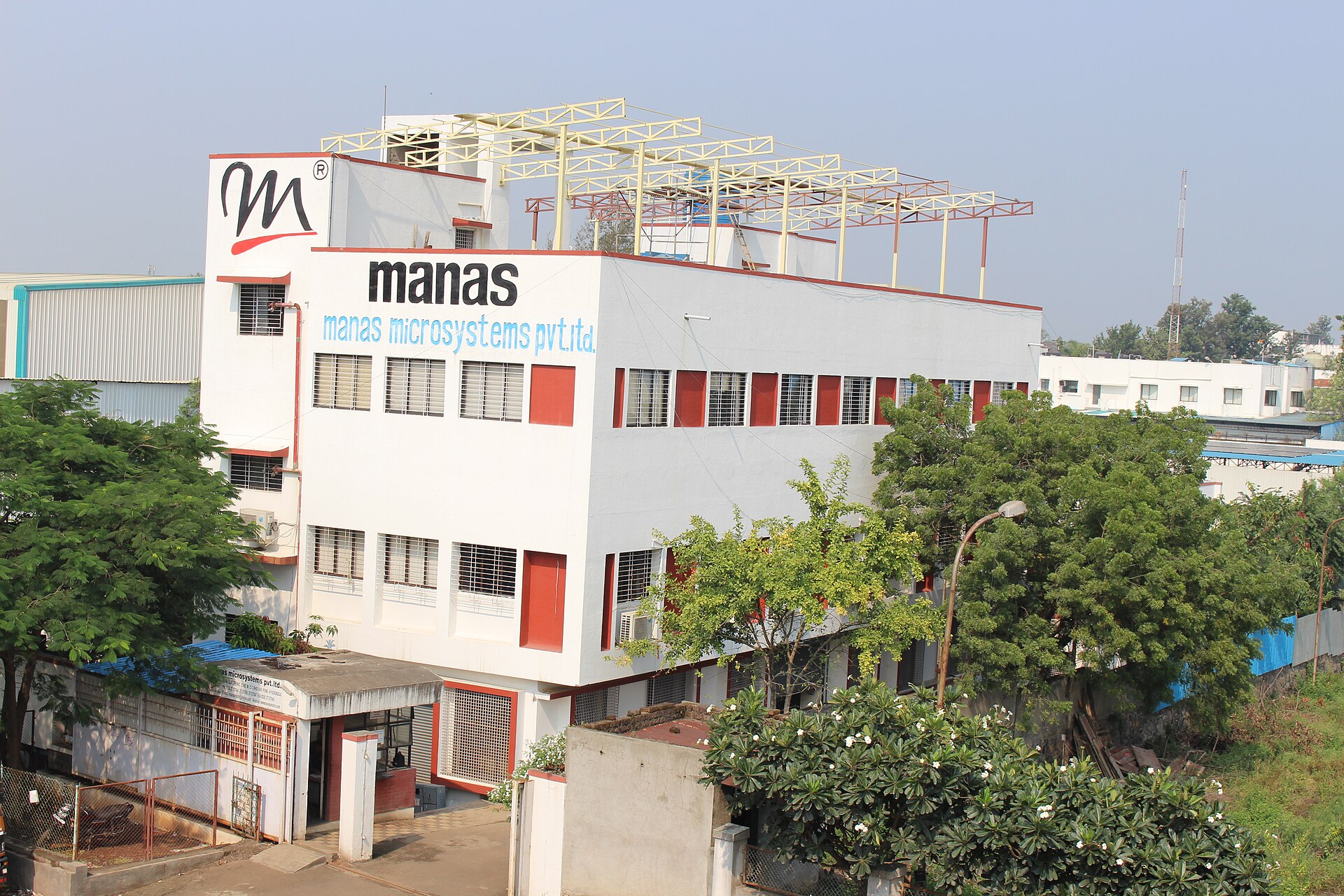
An engineering town before it became a vehicle town
Heavy engineering established itself here first, building machinery, pumps, boilers, forgings and industrial equipment for a domestic market that was closed to imports for decades. Vehicle manufacture layered onto that base rather than creating it, which is why the region's component suppliers are comfortable with low-volume, high-variety engineering work as well as with automotive series production. The legacy shows in the workforce too: fitters, pattern makers, machinists and design engineers trained in capital goods, and technical institutes that grew up around those employers rather than around assembly lines.
Casting, machining and the tiers that make the region useful
The supplier layer is the substantive attraction. Iron and aluminium foundries, forging shops, machining houses, sheet metal fabricators, heat treatment providers and toolrooms operate across the surrounding estates, many of them serving several industries at once. That means a buyer can source a machined casting or a welded assembly with local process control rather than importing it, and can find suppliers accustomed to engineering drawings and inspection reports. Capability is uneven, though, and the gap between a well-invested supplier with measurement discipline and a low-cost jobbing shop is wide enough to justify auditing every source individually.
Engineering services sitting next to the shop floor
One of the region's distinguishing features is the volume of product development work performed here for manufacturers worldwide: design offices, simulation and analysis teams, embedded software groups and testing facilities, some captive to global manufacturers and some operating as service providers. For a company placing production locally, that layer means design changes can be made in the same time zone as the factory, and validation testing can often be done nearby. It also competes for the same engineering graduates as the manufacturing plants, which keeps design salaries higher and turnover more visible than on the production side.
The road down to the port
Almost all containerised trade descends the escarpment to the container port complex serving Mumbai, and that descent is the corridor's structural weakness. The expressway is fast when clear and severely congested when it is not, monsoon conditions affect the ghat sections, and port dwell time adds its own variability. Inland container depots around the city absorb some of this by allowing customs clearance to happen locally before the road leg, which is why most established exporters use one. Anyone modelling delivery reliability here should treat the road-and-port sequence, not factory throughput, as the dominant uncertainty.
Land, water and power inside an industrial estate
Manufacturing land here is normally taken as an allotted plot inside a state industrial development estate, which supplies roads, water, effluent connections and a defined permitted use, and which shortens approvals considerably compared with acquiring land directly. Water allocation is the constraint to examine, because the plateau depends on reservoirs and monsoon replenishment and industrial supply competes with agriculture and cities. Grid electricity is generally available with backup generation still common. Environmental clearance requirements depend on the process category and belong at the front of a project schedule rather than the end.
Industrial sectors present
- commercial vehicle manufacturing
- automotive parts manufacturing
- machinery manufacturing
- foundry and casting
- industrial equipment manufacturing
- metal fabrication
- electrical equipment manufacturing
Frequently asked questions
- Why do global manufacturers put engineering centres in this region?
- Because the engineering talent and the factories are in the same place, which shortens the loop between a design change and a production trial. Mechanical design, simulation, embedded software and validation testing are all available, often from teams that have worked for international manufacturers for years and understand their standards. The practical caution is scope creep in reverse: work sent here tends to expand, and firms should decide deliberately how much product authority they are transferring rather than discovering it later.
- What should a buyer check in a foundry or forging supplier here?
- Look at process control evidence rather than at the pour. Ask for melt chemistry records, sand or die control data, heat treatment furnace calibration, and the arrangements for mechanical testing and non-destructive examination, including which laboratory performs them. Check machining capability, since many buyers need finished parts and the machining may be subcontracted. Then examine energy and environmental compliance, because foundries face tightening requirements and a supplier facing enforcement action is a supply risk.
- How much does port congestion actually affect a manufacturer here?
- Enough to change inventory policy. The plant may run reliably while the export leg varies by days depending on road conditions, clearance and vessel schedules, and the monsoon amplifies all three. Exporters manage it with inland clearance depots, earlier cut-off planning and buffer stock held at the destination rather than at the factory. When negotiating delivery terms, be explicit about which party carries the risk between the factory gate and the vessel, because that is where most disputes originate.
Data limitations
- Manufacturing figures are operator-supplied inputs, not market data. GeoBusinessIQ holds no factory costs, production volumes, yields, cycle times, tooling prices or capacity data and does not estimate them — every result reflects only the figures you enter.
- No manufacturer, supplier, vendor or factory is recommended, rated or ranked anywhere in this cluster, and no directory of them is published. Selection material describes how to run your own assessment; the assessment itself remains yours.
Explore the graph
Industries present
- Agricultural machinery manufacturing: building all year for a season that will not wait
- Automotive parts: a catalogue business that happens to own machines
- Electrical equipment makers: wound products, type tests and efficiency rules that rewrite catalogues
- Foundries: patterns, yield and metal you cannot un-pour
- Industrial equipment manufacturing: modular platforms and the slow bleed of option sprawl
- Machinery manufacturing: selling a promise, then financing it through milestones
Supply chain context
Sources
- Department for Promotion of Industry and Internal Trade, India — DPIIT (accessed )Covers: Indian industrial policy, manufacturing promotion programmes and industrial corridor development.Does not cover: Company-level data, programme eligibility, or supplier information.Why it matters: Cited on Indian sourcing and hub material for the national industrial policy environment.Review cadence: annual
- United Nations Industrial Development Organization — UNIDO (accessed )Covers: Industrial development analysis, industrial statistics methodology, and manufacturing capability programmes across member states.Does not cover: Company-level data, factory costs, supplier information, or real-time production statistics.Why it matters: The United Nations agency for industrial development; used for structural framing of how manufacturing sectors develop, never for point figures.Review cadence: annual
- OECD — OECD — economic and tax statistics (accessed ; reviewed )Covers: Comparable corporate tax, statutory rate, and economic indicators across member and partner economies.Does not cover: Effective tax rates, deductions and incentives, local surtaxes, and personal residency rules.Why it matters: Used as a cross-country baseline to sanity-check rates against primary tax-authority figures.Review cadence: Annual, plus on major statutory changes.
Educational and operational information only. This page describes an industrial location qualitatively; it publishes no output, employment, plant-count or ranking figures, names no individual manufacturer as a recommendation, and is not investment, siting, legal, or tax advice.
Last updated: