Tallinn and Harju: subcontract manufacturing wired into the Nordics
Estonian manufacturing around Tallinn operates as an extension of Nordic supply chains. Electronics assembly, metal fabrication, machine building and timber construction products are largely made to other companies' designs, for customers a ferry crossing away. The scale is small by demography rather than by ambition: the national industrial workforce is modest, so firms compete for people more fiercely than for orders, and automation arrives earlier here than wage levels alone would predict.
- Hub type
- industrial region
- Country
- Estonia
- Location
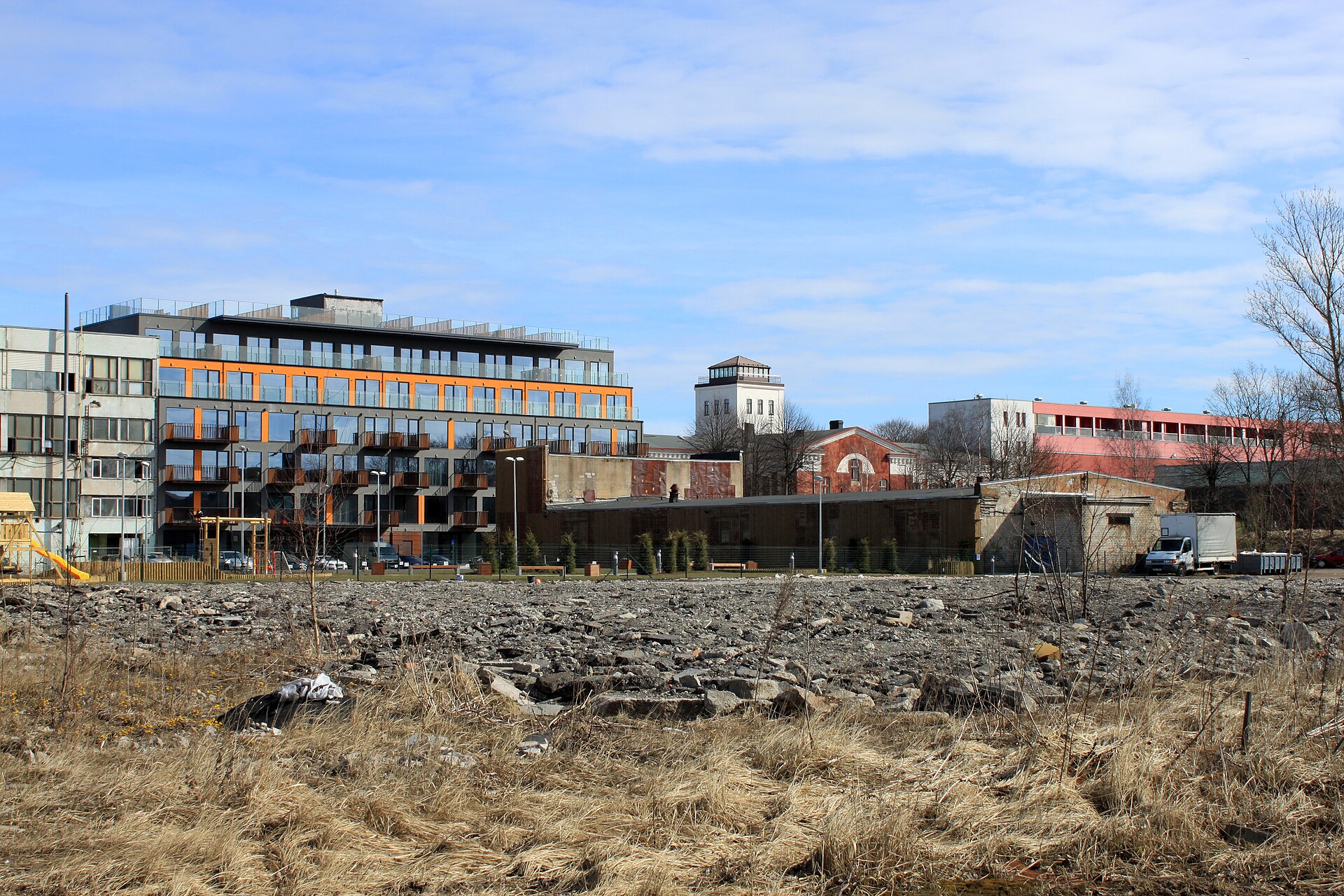
- Harju county surrounds Tallinn on Estonia's northern coast, facing Finland across the Gulf of Finland, with industrial estates ringing the capital and its port areas.
- Logistics connections
- ferry and short-sea roll-on roll-off links to Finland and Sweden, container and general cargo terminals in the Tallinn port complex, road corridor south through the Baltic states towards Poland, air cargo capacity, modest and mostly carried in passenger aircraft
A subcontracting economy facing north
The dominant business model is manufacturing to a customer's design and specification, with the customer usually Finnish, Swedish, Norwegian, German or Danish. That shapes the firms: they invest in process capability, certification and engineering support for industrialising somebody else's product rather than in brand, sales networks or product development. It also explains the sector mix, which mirrors Nordic industrial demand — electronics for equipment makers, sheet metal and welded structures, machinery sub-assemblies, wooden building elements. Cross-border management is routine here in a way it is not in larger countries, and English-language technical communication is standard.
What a small supplier base can and cannot absorb
The strengths are flexibility, engineering literacy and willingness to take modest quantities with real technical content. Firms will industrialise a prototype, handle mixed production and communicate directly with a customer's designers. The limits are equally clear. Surge capacity is thin, so a demand spike that a larger country's supply base would absorb becomes a scheduling negotiation here. Specialised process houses — advanced heat treatment, complex plating, precision optics — are few, so those steps are usually subcontracted abroad. Most raw material and every electronic component arrives imported, lengthening the inbound chain beyond what the short sea crossing suggests.
Demography as the hard constraint
The binding limit on manufacturing growth is the number of available people. The population is small, the working-age share is falling, and Finnish employers a short ferry ride away pay more for the same skills, which makes retention a permanent management task rather than an occasional problem. Employers respond by automating earlier than their wage costs would justify, by designing work so that fewer, more skilled people run more equipment, and by recruiting from abroad within the limits of immigration rules. A capacity plan for a plant here should be built on headcount realism first and on floor space second.
Timber, prefabrication and export by ferry
Prefabricated building elements are a genuine regional specialism: wall and roof panels, timber frames and complete modular units built indoors and shipped to sites across the Nordic countries and beyond. Factory production suits a climate with a short building season, and quality is controlled in ways site construction cannot match. The industrial constraints are unusual, though: the product is bulky and light, so transport is priced by volume, and the maximum module dimensions are set by what can be loaded onto a ferry deck and moved by road at the destination. Design and logistics are therefore inseparable.
Administration, energy and what actually makes the location work
Company administration is unusually low friction, with digital registration, electronic filing and remote signature used as normal business practice rather than as a novelty, which matters to a foreign owner running a plant from another country. Electricity comes from a Baltic grid now synchronised with the continental European system, and the country's oil shale generation legacy is being displaced, which has made power supply and its emissions profile an active planning question. European regulatory alignment means products made here enter the single market without additional conformity work, which is much of the reason Nordic customers place production on this side of the gulf.
Industrial sectors present
- electronics assembly
- metal fabrication
- modular construction manufacturing
- furniture manufacturing
- machinery manufacturing
- plastics
Frequently asked questions
- Is the labour cost advantage over the Nordic countries durable?
- It has been narrowing steadily and should not be the centre of a business case. Wages have risen as the economy converged, and the open labour market with Finland puts direct upward pressure on skilled pay. What remains durable is a different set of advantages: short transport distance, aligned regulation, comfortable technical communication, and manufacturers experienced at taking on another company's product. Firms planning on cost alone tend to be disappointed within a few years of arriving.
- How reliable are the ferry links for industrial freight?
- For routine flows they are dependable, frequent and integrated with road haulage, which is why so many suppliers here serve Finnish customers on short delivery cycles. The exposures are weather, which can disrupt sailings in winter, and capacity on peak sailings. Because the crossing is short, most shippers plan around a missed sailing rather than around a lost week. For heavy or oversized loads, deck space and loading arrangements should be checked with the operator during product design rather than afterwards.
- What kind of manufacturer fits this location well?
- One needing capable, flexible production of modest volume with real engineering content, close to Nordic or northern European customers. Electronics assembly for industrial equipment, welded and machined structures, machinery sub-assemblies and factory-built construction elements all fit that description. Poor fits are operations needing large workforces, deep local component supply or a wide choice of specialised process subcontractors, since the country simply does not have the industrial population to provide them.
Data limitations
- Manufacturing figures are operator-supplied inputs, not market data. GeoBusinessIQ holds no factory costs, production volumes, yields, cycle times, tooling prices or capacity data and does not estimate them — every result reflects only the figures you enter.
- No manufacturer, supplier, vendor or factory is recommended, rated or ranked anywhere in this cluster, and no directory of them is published. Selection material describes how to run your own assessment; the assessment itself remains yours.
Explore the graph
Industries present
- Agricultural machinery manufacturing: building all year for a season that will not wait
- Contract board assembly: clear-to-build, line hours and the handover pack
- Furniture manufacturing: bulky products, thin freight economics and made-to-order pressure
- Machinery manufacturing: selling a promise, then financing it through milestones
- Office furniture manufacturing: project business dressed as product manufacturing
- Plastics manufacturing: a conversion-margin business, not a materials business
Sources
- Statistics Estonia — Statistics Estonia (accessed )Covers: Official Estonian statistics including manufacturing output, employment and business demography.Does not cover: Forecasts, or plant-level figures.Why it matters: Cited as the official statistical authority for structural statements about Estonian industry.Review cadence: annual
- Eurostat — Eurostat — official statistics of the European Union (accessed ; reviewed )Covers: EU-harmonised VAT rates and economic statistics for EU/EEA member states.Why it matters: Used for EU VAT and member-state economic figures where an EU-harmonised series is preferable.
Educational and operational information only. This page describes an industrial location qualitatively; it publishes no output, employment, plant-count or ranking figures, names no individual manufacturer as a recommendation, and is not investment, siting, legal, or tax advice.
Last updated: